Physical Education
Our report for the spending of the Sport Premium Funding can be found by clicking here
Our Vision for Physical Education
At St Willibrord's RC Primary School, we want every child to develop the physical competence, confidence, knowledge and enjoyment needed to lead an active and healthy life.
Our PE curriculum is designed to give all pupils opportunities to develop their movement skills, participate in a broad range of physical activities, work individually and as part of a team, compete appropriately and learn how to improve their own performance.
We want children to leave St Willibrord's with positive attitudes towards physical activity and with the knowledge, skills and confidence to continue participating in sport and physical activity beyond primary school.
Our PE Curriculum
We use Get Set 4 PE to support the planning and delivery of our PE curriculum from Early Years through to Year 6.
The curriculum is sequenced so that pupils revisit and develop important physical skills as they move through school. Activities become increasingly demanding as pupils develop greater control, coordination, technique, tactical understanding and independence.
Across the school, pupils experience a broad range of areas including:
-
fundamental movement skills
-
ball skills
-
sending and receiving
-
dance
-
gymnastics
-
fitness
-
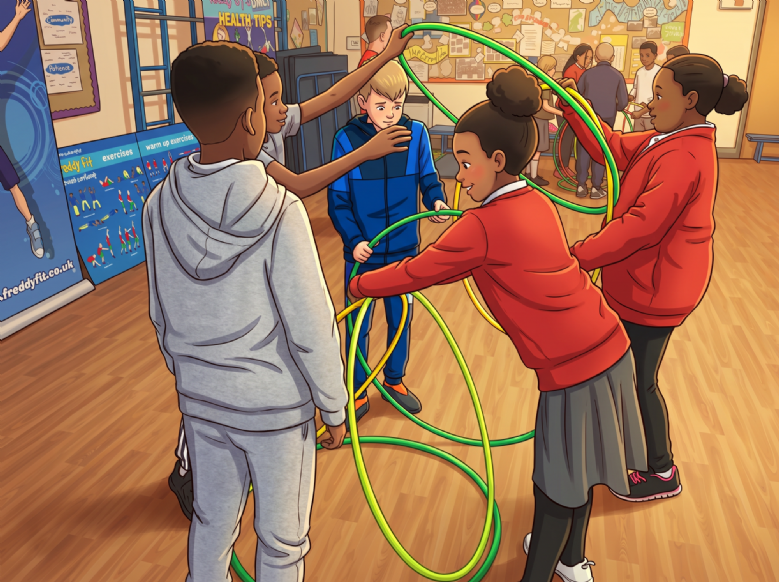
team building
-
invasion games
-
net and wall games
-
striking and fielding games
-
athletics
-
outdoor and adventurous activities
-
swimming and water safety
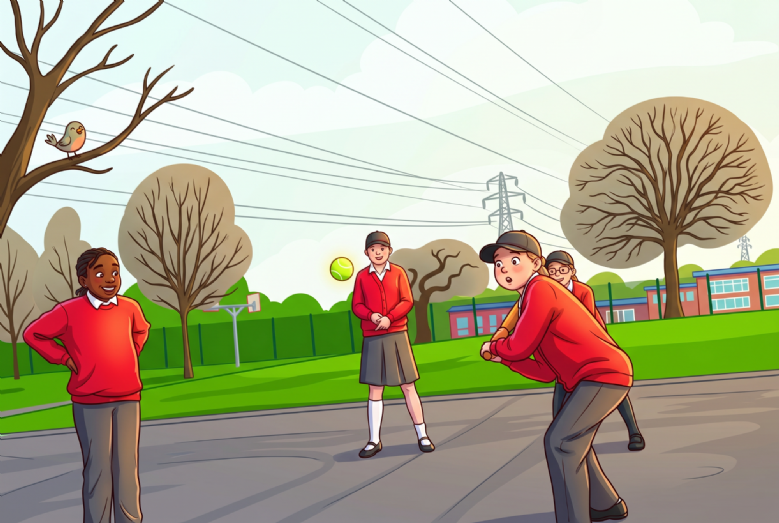
Within Key Stage 2, these skills are increasingly applied through recognised sports and activities including basketball, football, hockey, handball, badminton, volleyball, tag rugby, cricket, tennis and rounders.
Early Years
Physical development is an important part of our Early Years curriculum.
Children develop their gross motor skills, balance, coordination and spatial awareness through carefully planned physical activity and through opportunities within the wider Early Years provision.
These experiences establish the movement skills and confidence that children need as they move into the National Curriculum for PE in Key Stage 1.
Key Stage 1
During Key Stage 1, the curriculum places particular emphasis on developing secure fundamental movement skills.
Children learn to move confidently in different ways and develop skills including running, jumping, balancing, throwing, catching, sending and receiving. They begin to apply these skills within games and other physical activities.
Pupils also experience dance, gymnastics, athletics and a range of introductory games, developing their ability to work safely and successfully with others.
Key Stage 2
During Key Stage 2, pupils build on their earlier movement skills and apply them with increasing control, accuracy and tactical awareness.
They experience a progressively wider range of sports and physical activities and learn how to:
-
use a range of movements and techniques effectively;
-
apply skills within increasingly challenging situations;
-
develop attacking and defending principles;
-
communicate and collaborate as part of a team;
-
compete appropriately and demonstrate fair play;
-
evaluate performance and consider how it can be improved;
-
develop fitness, stamina, strength and flexibility.
Outdoor and Adventurous Activities form part of our Key Stage 2 curriculum. Pupils have opportunities to solve problems, make decisions and work both individually and collaboratively, including through orienteering activities.
Swimming and Water Safety
Swimming and water safety are an important part of our Key Stage 2 PE curriculum.
At St Willibrord's, pupils undertake an intensive swimming programme during Year 4, which currently takes place during the Autumn Term.
Pupils are taught to develop their confidence and competence in the water, use a range of swimming strokes and understand essential water-safety and self-rescue skills.
We monitor pupils' progress in swimming so that we can identify children who require further support in meeting the National Curriculum expectations by the end of Key Stage 2.
Inclusion
PE at St Willibrord's is for every pupil.
Teachers adapt activities, equipment, space, groupings and levels of challenge so that pupils can participate meaningfully and make progress from their individual starting points.
This includes considering the needs of pupils with SEND, pupils who may be less confident in physical activity and pupils who require additional challenge.
Our aim is not simply for children to take part, but for all pupils to develop their physical competence and understanding over time.
Assessment
Assessment is built into our PE curriculum.
Teachers use the assessment opportunities within Get Set 4 PE, alongside their observations of pupils during lessons, to consider how securely pupils are developing the knowledge and physical skills taught within each unit.
Assessment helps teachers to identify where pupils require further practice, support or additional challenge and informs subsequent teaching.
PE Beyond the Curriculum
Curriculum PE is complemented by opportunities for pupils to participate in physical activity and sport beyond lessons.
These can include:
-
after-school sports clubs;
-
competitions and sporting events;
-
opportunities provided through our local school and sporting partnerships;
-
active breaktimes and lunchtimes;
-
Sports Day and other whole-school physical activities;
-
opportunities for pupils to develop leadership and teamwork through sport.
These wider opportunities enhance our PE curriculum but do not replace the progressive physical education taught during curriculum time.
Developing Our PE Provision
We continually review our PE provision to ensure that it meets the needs of our pupils.
Our current development work includes strengthening:
-
the consistent implementation of Get Set 4 PE across school;
-
assessment and the use of assessment information;
-
evidence of pupils' physical development and progress over time;
-
progression and increasing challenge between year groups;
-
inclusive participation for all groups of pupils;
-
Outdoor and Adventurous Activities;
-
swimming and water-safety monitoring; and
-
opportunities for pupils to participate in physical activity, leadership and competitive sport.
Our focus is on ensuring that pupils do not simply experience a wide range of activities, but get better at PE as they progress through St Willibrord's.