Computing
At St Willibrord’s, we want pupils to become confident, capable and responsible users of technology. Our Computing curriculum develops pupils’ understanding of how digital technology works, how it can be used creatively and effectively, and how to use it safely and responsibly.
Our Computing curriculum is based principally on the Kapow Primary 2026/27 condensed Computing curriculum and is organised to develop knowledge and skills progressively from Year 1 to Year 6.
Our Computing curriculum
Computing is built around the three main areas of the National Curriculum:
-
Computer science – understanding how computers and digital systems work and learning how to program them.
-
Information technology – using digital tools to create, organise, store, analyse and present information.
-
Digital literacy – using technology confidently, responsibly and safely.
Across these areas, pupils develop their understanding through five recurring strands:
-
Computing systems and networks
-
Programming
-
Data handling
-
Creating media
-
Online safety
Knowledge and skills are revisited and developed with increasing complexity as pupils move through the school.
Progression through the school
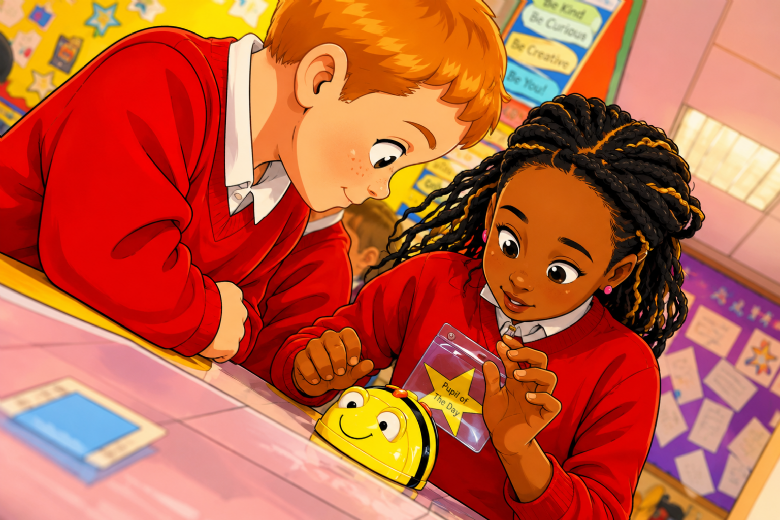
In Year 1, pupils begin by learning how computers are used and how to operate them effectively. They develop early programming skills using Bee-Bots and begin to collect, organise and present simple data.
In Year 2, pupils deepen their understanding of how computers use inputs, programs and outputs. They develop programming through MakeCode and learn to create digital content for a specific purpose and audience. Pupils also learn about online privacy and safe use of technology.
In Year 3, pupils develop their programming skills through Scratch, explore how digital devices connect and communicate, and learn how information can be organised using branching databases.
In Year 4, pupils extend their coding skills through more complex Scratch projects, develop their understanding of computer networks and learn how digital images can be created and edited. Online safety learning develops pupils’ understanding of communicating and connecting safely online.
In Year 5, pupils use BBC micro:Bit to explore physical computing and increasingly sophisticated programming. They investigate websites, search and digital storage and use spreadsheets to organise, analyse and present data.
In Year 6, pupils progress to text-based programming using Python. They develop their understanding of computer hardware, storage and security and bring together their media skills to create multimedia projects for a particular purpose and audience. Online safety learning also considers social media, online identity and managing risks online.
Developing computational thinking
As pupils move through the school, they learn to think increasingly systematically and independently.
They develop the ability to:
-
understand and create algorithms;
-
write and modify programs;
-
identify and correct errors through debugging;
-
use logical reasoning to predict outcomes;
-
select appropriate digital tools for a task;
-
organise, analyse and present data;
-
create digital content for different purposes and audiences;
-
understand how computers, devices and networks communicate;
-
evaluate and improve their digital work.
Programming therefore develops from simple sequences and instructions towards more complex use of variables, conditions, loops and text-based coding.
Online safety
Online safety is an important part of our Computing curriculum and is also reinforced through wider school teaching.
Pupils learn how to use technology safely, respectfully and responsibly. This includes understanding:
-
passwords and personal information;
-
appropriate online behaviour;
-
communication with others online;
-
recognising and responding to unsafe or inappropriate content or contact;
-
online identity and digital footprints;
-
how to block, mute and report concerns;
-
when and how to seek help from a trusted adult.
Specific Online Safety units are taught within each phase alongside safety learning embedded throughout Computing and the wider curriculum.
Inclusion
Our Computing curriculum is ambitious for all pupils. Teachers adapt teaching, resources, equipment and support where necessary so that pupils can access the same important Computing knowledge and develop increasing independence when using technology.
Our curriculum plans
Further information about the Computing units taught in each year group can be found within our Curriculum by Year Group plans.
If you would like further information about our Computing curriculum, please contact the school.